




By using this site, you agree to the Privacy Policy and Terms of Use.
Accept
Forbes ukForbes uk
Notification Show More
Latest News
NASA made enough oxygen on Mars to last an astronaut
Science
3 investors explain why earned wage access startups are set
tech Technology
Is it normal to bleed postmenopause? Know the answer from
Health
Risk for Orion is even higher than for SLS, says
Science
High-end speaker manufacturer Devialet raises $50 million
tech Technology
Aa
  • U.K News
  • Business
  • Money
  • Health
  • Entertainment
  • Science
  • Technology
  • Insider
Reading: NASA made enough oxygen on Mars to last an astronaut
Share
Aa
Forbes ukForbes uk
Search
  • U.K News
  • Business
  • Money
  • Health
  • Entertainment
  • Science
  • Technology
  • Insider
Have an existing account? Sign In
Follow US
Forbes uk > Blog > Science > NASA made enough oxygen on Mars to last an astronaut
Science

NASA made enough oxygen on Mars to last an astronaut

Jake
Last updated: 2025/09/13 at 7:48 PM
Jake Published September 13, 2025
Share
SHARE

NASA’s MOXIE experiment on Mars has produced about 100 minutes’ worth of breathable oxygen, raising hopes for future crewed missions

Space 31 August 2025

By Jacklin Kwan
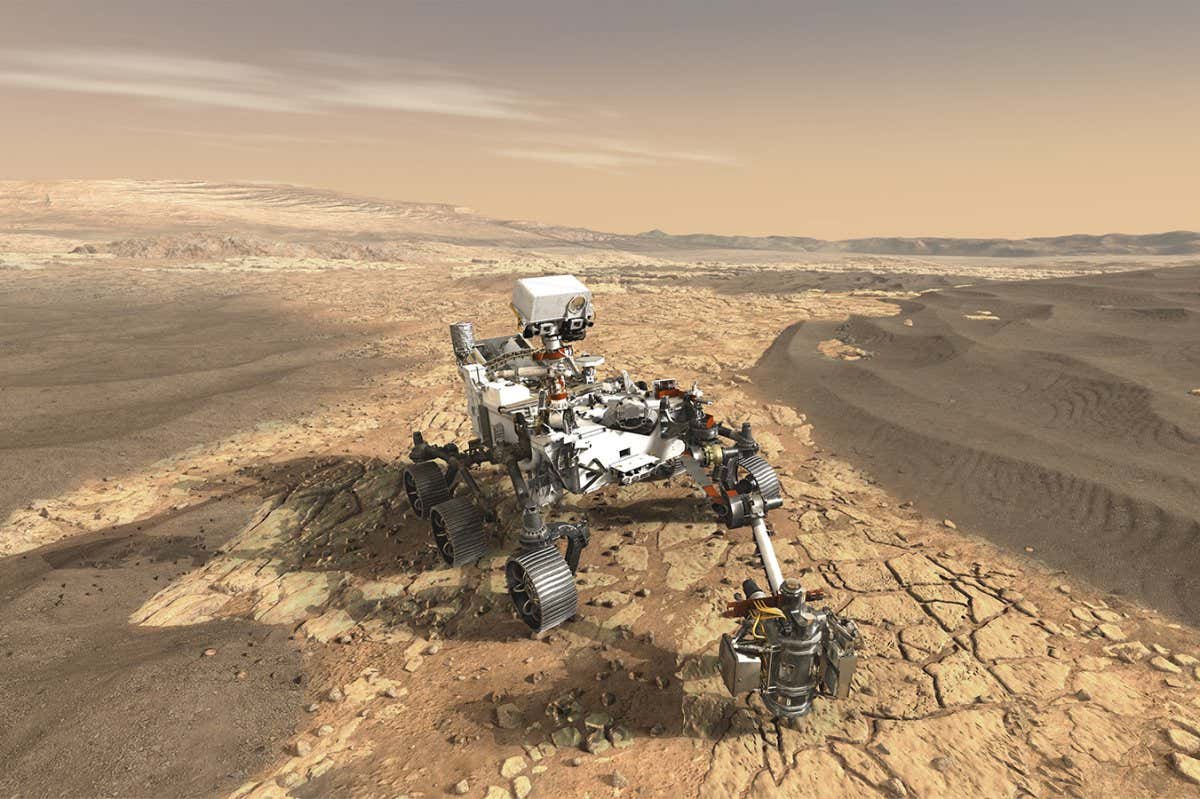
Artist's concept pf Perseverance rover

The MOXIE experiment landed on Mars on NASA’s Perseverance rover (artists’s impression)

NASA/JPL-Caltech

NASA’s small experiment to produce oxygen on Mars managed to generate about 100 minutes’ worth of breathable oxygen in 2021. Now it is set to be scaled up to support future human exploration.

The Mars Oxygen In-Situ Resource Utilization Experiment (MOXIE) is a small oxygen-generating device that landed on the Red Planet atop the Perseverance rover in February 2021.

Over the course of seven hour-long production runs during that year, MOXIE was able to reliably produce roughly 15 minutes of oxygen per hour in a variety of harsh planetary conditions. That added up to a total of 50 grams of oxygen in total – about 100 minutes’ worth of breathable oxygen for a single astronaut.

Advertisement

“At the highest level, this is just a brilliant success,” says Michael Hecht at the Massachusetts Institute of Technology Haystack Observatory, who co-leads the MOXIE experiment.

In day or night, at different extreme temperatures and in the wake of a dust storm, Hecht says that MOXIE continued producing high-purity oxygen.

The NASA team is now looking to create a bigger version of the device, which would produce not only enough life support for a crewed Mars mission, but also enough oxygen to propel a return rocket to Earth.

MOXIE requires pumps and compressors to suck in carbon dioxide from the Martian atmosphere as well as heaters that can raise the air’s temperature to 800°C (1470°F).

The device then pulls the oxygen atoms from the carbon dioxide to produce oxygen gas, which MOXIE has been measuring, before releasing it.

There will be some challenges in scaling up this technology, though, says Gerald Sanders at the NASA Johnson Space Center in Houston, Texas.

These include being able to insulate a larger version of MOXIE to manage its internal temperature and ensuring that the device heats up uniformly to prevent it from breaking.

Sanders also says that an oxygen device that can support a human mission would need to operate continuously for about 400 days, and so far, MOXIE’s runs have only lasted for an hour each.

“That’s a lot of hours to put on the hardware, irrespective of what the technology is,” he says.

Nonetheless, MOXIE’s first year of success has been a big step forward in showing the technology’s potential, says Sanders.

NASA is now testing the hardware needed at a scale that would be relevant to a human mission. The larger version is likely to be about a cubic metre in size, which shouldn’t present a problem for launches.

Sign up to our free Launchpad newsletter for a voyage across the galaxy and beyond, every Friday

More on these topics:

You Might Also Like

3 investors explain why earned wage access startups are set

Is it normal to bleed postmenopause? Know the answer from

Risk for Orion is even higher than for SLS, says

High-end speaker manufacturer Devialet raises $50 million

TAGGED: art, galaxy, life, Science, tech, Technology
Jake September 13, 2025
Share this Article
Facebook Twitter Email Print
Leave a comment

Click here to cancel reply.

Please Login to Comment.

Follow US

Find US on Social Medias
Facebook Like
Twitter Follow
Pinterest Pin
Youtube Subscribe
newsletter featurednewsletter featured

POST YOUR ARTICLE

Submit Your Request for Home page Feature Guest Post!

Popular News
U.K News

EPHRAIM HARDCASTLE: It's go time for Boris Johnson's honours list

Jake Jake September 13, 2025
Tame your high BP issues with these yoga asanas and
5 mature ways to deal with infidelity in your relationship
Joe Biden can take the BEAST to Queen's funeral at
Pine marten seen in London for the first time in
- Advertisement -
Ad imageAd image
Global Coronavirus Cases

Confirmed

609.12M

Death

6.52M

More Information:Covid-19 Statistics

Categories

  • ES Money
  • U.K News
  • The Escapist
  • Insider
  • Science
  • Technology
  • LifeStyle
  • Marketing

About US

We influence 20 million users and is the number one business and technology news network on the planet. For Post an Article Email! post@forbese.co.uk
Quick Link
  • My Bookmark
  • Interests
  • Contact Us
  • Blog Index
Top Categories
  • U.K News
  • Business
  • Money
  • Health
  • Entertainment
  • Science
  • Technology
  • Insider

Subscribe US

Subscribe to our newsletter to get our newest articles instantly!

© FORBESE.CO.UK. All Rights Reserved.

Removed from reading list

Undo
Welcome Back!

Sign in to your account

Lost your password?