





An implant embedded in Australian animals that releases lethal poison when feral cats eat them could stop species being driven to extinction by cat predation
Environment 5 September 2025
By Alice Klein
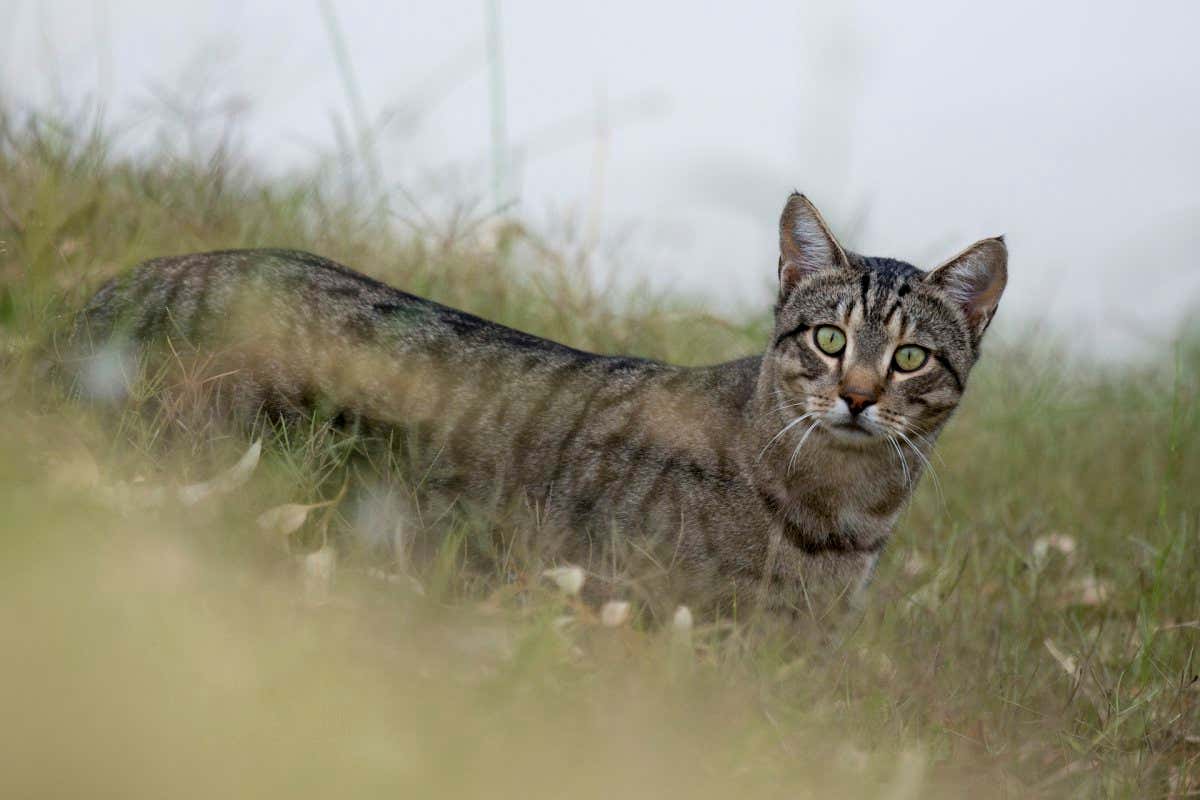
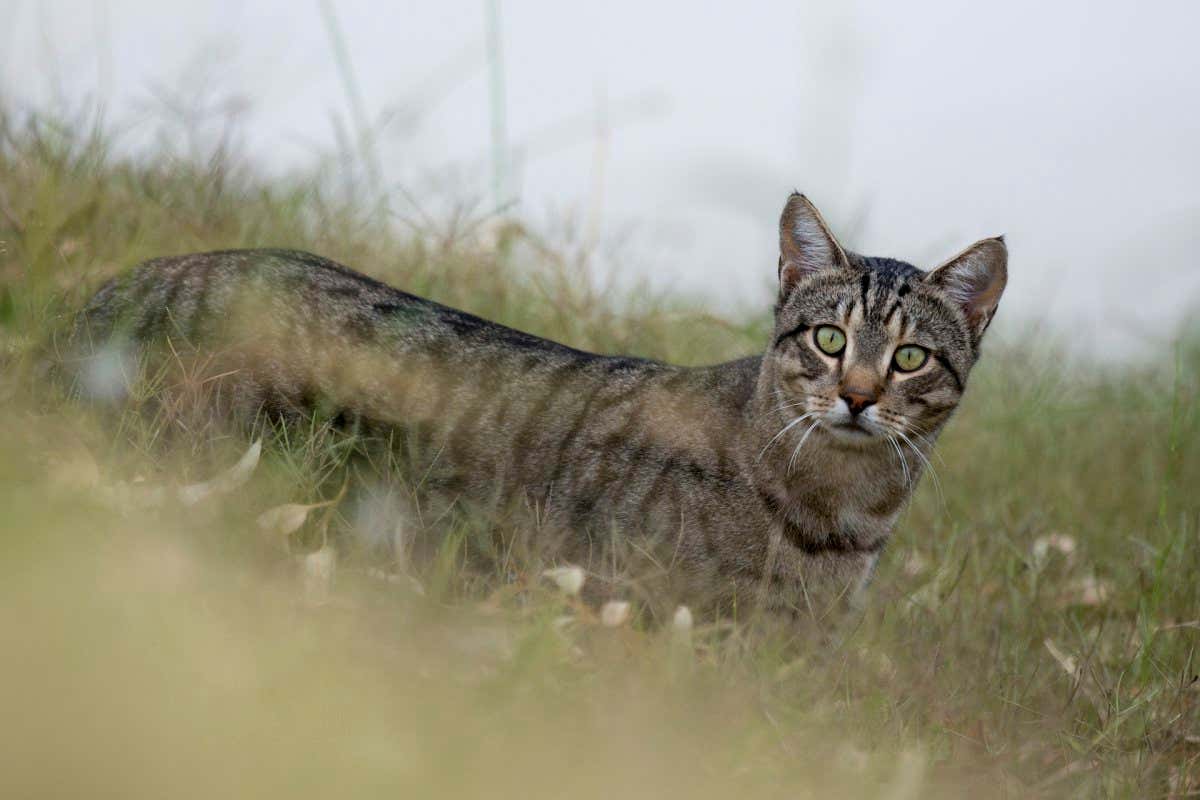
Feral cats are driving many species of native Australian mammals to extinction
John Carnemolla/Getty Images
An implant that makes Australian animals lethally poisonous to cats that prey on them could help save species on the verge of extinction.
Cats have had a devastating impact on Australia’s wildlife since they were introduced by Europeans about 200 years ago. Up to 6.3 million feral cats now roam the country, killing an estimated 450 million native mammals each year, as well as many birds and reptiles. They have already contributed to more than 20 Australian mammals going extinct and threaten the survival of at least 124 more species.
Australian mammals are easily targeted by cats because many are small and they haven’t had time to evolve natural defences since the cats turned up. To provide an artificial defence strategy, Anton Blencowe and Kyle Brewer at the University of South Australia and their colleagues have invented an implant that makes native mammals lethal to cats if eaten, thereby preventing the felines from killing other individuals.
Advertisement
The rice-sized implant is inert when it is inserted under the native mammal’s skin at the back of the neck. If a cat eats the mammal, it is likely to swallow the implant, because cats usually eat the whole bodies of their prey. Once the cat ingests the implant, the acid inside the cat’s stomach breaks it open and releases a fatal poison.
The poison – sodium fluoroacetate, or “1080” – leads to unconsciousness then death in cats by causing an energy shutdown in their cells. It is already widely used in poison baits for feral cats because it is relatively non-toxic to native animals, so it shouldn’t harm other predators that may end up consuming the implant. This is because sodium fluoroacetate naturally occurs in many Australian plants and native animals have evolved resistance to it.
In an unpublished laboratory trial, feral cats were given rabbit carcasses that each contained one of the rice-sized implants. The cats all died within 6 to 12 hours of consuming the carcasses, seemingly in a relatively painless way. “They just kind of curl up and slow down,” says Blencowe.
In a subsequent unpublished field trial in 2021, the researchers inserted the implants under the skin of 30 native bilbies at a large wildlife reserve in South Australia where feral cats are also present. Bilbies are small, furry, long-eared marsupials that are threatened by cat predation.
Unfortunately for the researchers, the trial coincided with a mouse plague that created so much food for the cats that they didn’t try to eat any of the bilbies. “But at least all the bilbies survived fine, so that tells us the implants are safe,” says Blencowe.
If future field trials establish that the implants work, they could help to support Australia’s rewilding programmes, says Brewer.
These involve fencing off large sections of wilderness, removing as many feral cats as possible, then reintroducing native animals that are often critically endangered and only exist in captivity. The aim is to restore wild populations, but the programmes sometimes fail because of the difficulty of removing every single feral cat with traditional methods like baiting, trapping and shooting.
“Just one cat that’s left can quickly wipe out a whole population of reintroduced animals,” says Brewer. Inserting the implants into the native animals before their release could help eliminate these last “problem individual” cats, he says.
There is no danger of domestic cats consuming the lethal implants because the rewilding programmes are conducted in remote areas, says Brewer.
Some animal welfare groups believe that killing feral cats is inhumane, but Brewer says it is currently the only viable way to protect vulnerable Australian species. “The aim of our project isn’t to kill feral cats, it’s to protect native species; it’s just an unfortunate reality that the way to do that is through lethal control of cats.”
Di Evans at animal charity RSPCA Australia says “culling of feral cats can be justified as long as direct impacts caused by feral cats are shown and that the methods are effective and humane”.
Animal advocacy group PETA (People for the Ethical Treatment of Animals) argues that a more humane approach would be to catch feral cats and administer them contraceptives so they stop breeding and eventually dwindle out. But Evans says this is impractical because many feral cats are in remote areas where they are hard to catch, and those that are given contraceptives will still hunt and kill native animals.
Journal reference: ACS Applied Polymer Materials, DOI: 10.1021/acsapm.2c01041
Sign up to our free Fix the Planet newsletter to get a dose of climate optimism delivered straight to your inbox, every Thursday
More on these topics: