




By using this site, you agree to the Privacy Policy and Terms of Use.
Accept
Forbes ukForbes uk
Notification Show More
Latest News
Legionnaires’ disease may be cause of mystery pneumonia in Argentina
Science
Gisele Bündchen Says She’d Like Tom Brady to “Be More
Entertainment
7 exercises to strengthen your knees and manage osteoarthritis
Health
The Amazon rainforest has already reached a crucial tipping point
Science
The White Lotus’ Jennifer Coolidge, Sydney Sweeney and More Reunite
Entertainment
Aa
  • U.K News
  • Business
  • Money
  • Health
  • Entertainment
  • Science
  • Technology
  • Insider
Reading: Legionnaires’ disease may be cause of mystery pneumonia in Argentina
Share
Aa
Forbes ukForbes uk
Search
  • U.K News
  • Business
  • Money
  • Health
  • Entertainment
  • Science
  • Technology
  • Insider
Have an existing account? Sign In
Follow US
Forbes uk > Blog > Science > Legionnaires’ disease may be cause of mystery pneumonia in Argentina
Science

Legionnaires’ disease may be cause of mystery pneumonia in Argentina

Jake
Last updated: 2025/09/13 at 5:35 PM
Jake Published September 13, 2025
Share
SHARE

Lab tests suggest that Legionella bacteria are involved in an 11-person outbreak of unexplained pneumonia cases at a private medical clinic in Tucumán

Health 5 September 2025

By Carissa Wong
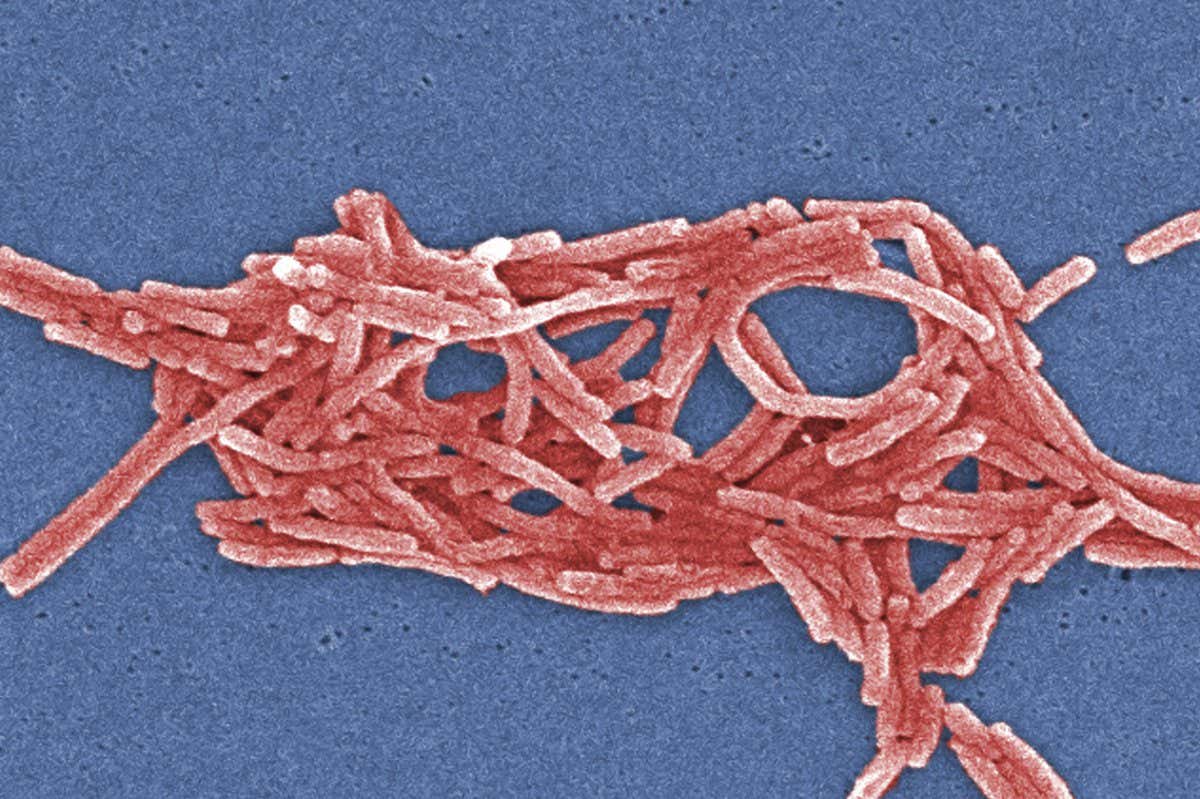
2009 Margaret Williams, PhD; Claressa Lucas, PhD;Tatiana Travis, BS Under a moderately-high magnification of 6500X, this colorized scanning electron micrograph (SEM) depicted a grouping of Gram-negative Legionella pneumophila bacteria. Please see PHIL 11092 through 11140 for additional SEMs of these organisms, specifically PHIL 11121 for a black and white version of this image. You?ll note that a number of these bacteria seem to display an elongated-rod morphology. L. pneumophila are known to most frequently exhibit this configuration when grown in broth, however, they can also elongate when plate-grown cells age, as it was in this case, especially when they?ve been refrigerated. The usual L. pneumophila morphology consists of stout, ?fat? bacilli, which is the case for the vast majority of the organisms depicted here. These bacteria originated on a 1 week-old culture plate (+/- 1 day), which had incubated a single colony, at 37?C upon a buffered charcoal yeast extract (BCYE) medium with no antibiotics.

The bacteria Legionella pneumophila causes Legionnaires’ disease

Janice Haney Carr/DCD

A cluster of unexplained pneumonia cases in Argentina that has led to four deaths may have been caused by Legionnaires’ disease.

The outbreak, which occurred at a private medical clinic in the Tucumán province of north-western Argentina, has so far involved 11 people. Four people are currently hospitalised, two are receiving treatments outside the clinic and one person has been discharged. The cases have included at least eight healthcare workers, two of whom have died.

The origin of the outbreak was unknown, prompting concern. Now, preliminary lab tests on two people’s lung samples have indicated the presence of the bacteria Legionella pneumophila, according to a report by the Pan American Health Organization published on 3 September.

Advertisement

L. pneumophila causes Legionnaires’ disease and is commonly found in rivers, lakes and reservoirs in small quantities. Legionnaires’ disease is rare and is usually caused by inhaling tiny airborne water droplets, or aerosols, expelled from contaminated air conditioning units, humidifiers and taps.

As well as lung inflammation, common symptoms of the condition include fever, muscle aches, diarrhea, shortness of breath and headaches. Legionnaires’ disease can be treated using antibiotics, but people with more severe cases may need to be supplied with oxygen or put on a ventilator.

Researchers hope to confirm the early findings by sequencing more microbial genes from lung samples, analysing the antibodies produced by those infected and growing the microbe in the lab.

“The circumstantial evidence collected so far is consistent with Legionella, but evidence of Legionella from environmental sampling or from more established diagnostics from more of the patients would be required to give a confident confirmation,” says Martin Hibberd at the London School of Hygiene & Tropical Medicine.

“Usually, regulations stipulate that water storage and plumbing should be chemically dosed with disinfectant to prevent Legionella contamination. With a clean water system and regular checks, future cases can be prevented,” says Hibberd.

More on these topics:

You Might Also Like

Gisele Bündchen Says She’d Like Tom Brady to “Be More

7 exercises to strengthen your knees and manage osteoarthritis

The Amazon rainforest has already reached a crucial tipping point

The White Lotus’ Jennifer Coolidge, Sydney Sweeney and More Reunite

TAGGED: art, Health, lab, medical, Science, stem
Jake September 13, 2025
Share this Article
Facebook Twitter Email Print
Leave a comment

Click here to cancel reply.

Please Login to Comment.

Follow US

Find US on Social Medias
Facebook Like
Twitter Follow
Youtube Subscribe
Telegram Follow

Weekly Newsletter

Subscribe to our newsletter to get our newest articles instantly!

Popular News
Science

Omicron-Specific Booster Shots: 5 Questions Answered

Jake Jake September 13, 2025
Escape review: An account of the internet’s intimate early days
Cash Isa rates rise as new 1
Queen Consort Camilla's dogs make Buckingham Palace their new home
The Number of Children Orphaned by COVID Keeps Rising
- Advertisement -
Ad imageAd image
Global Coronavirus Cases

Confirmed

609.12M

Death

6.52M

More Information:Covid-19 Statistics

Categories

  • ES Money
  • U.K News
  • The Escapist
  • Insider
  • Science
  • Technology
  • LifeStyle
  • Marketing

About US

We influence 20 million users and is the number one business and technology news network on the planet. For Post an Article Email! post@forbese.co.uk
Quick Link
  • My Bookmark
  • Interests
  • Contact Us
  • Blog Index
Top Categories
  • U.K News
  • Business
  • Money
  • Health
  • Entertainment
  • Science
  • Technology
  • Insider

Subscribe US

Subscribe to our newsletter to get our newest articles instantly!

© FORBESE.CO.UK. All Rights Reserved.

Removed from reading list

Undo
Welcome Back!

Sign in to your account

Lost your password?