




By using this site, you agree to the Privacy Policy and Terms of Use.
Accept
Forbes ukForbes uk
Notification Show More
Latest News
25+ iOS 16-ready apps featuring Lock Screen widgets you can
Technology
Move, breathe, connect: Malaika Arora sums up her 3-part fitness
Health
Bioengineered plants help produce moth pheromones for pest control
Science
Is the glass half-empty or half-full in the seed market?
Technology
Sheryl Lee Ralph’s Kids Deserve an Emmy for Their Reaction
Entertainment
Aa
  • U.K News
  • Business
  • Money
  • Health
  • Entertainment
  • Science
  • Technology
  • Insider
Reading: Bioengineered plants help produce moth pheromones for pest control
Share
Aa
Forbes ukForbes uk
Search
  • U.K News
  • Business
  • Money
  • Health
  • Entertainment
  • Science
  • Technology
  • Insider
Have an existing account? Sign In
Follow US
Forbes uk > Blog > Science > Bioengineered plants help produce moth pheromones for pest control
Science

Bioengineered plants help produce moth pheromones for pest control

Jake
Last updated: 2025/09/13 at 6:57 PM
Jake Published September 13, 2025
Share
SHARE

Pheromones are often used by farmers for controlling pest insects but the chemical process for producing them is expensive. A method for making them using bioengineered oil plants could be cheaper

Environment 1 September 2025

By James Dinneen
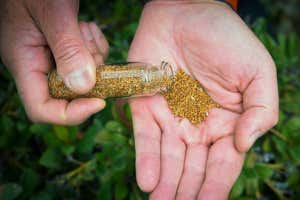
camelina oilseeds

The camelina oilseed plant can be used to make insect pheromones

Kurt Miller

A bioengineered oilseed plant can produce a moth sex pheromone molecule used to control insect pests.

Pheromones are chemical signals that cause a behavioural response in members of the same or closely related species. For decades, farmers have used pheromones to keep pest insects away from high-value crops like apples and grapes, for instance by baiting traps with the chemicals or saturating fields with them to make it difficult for the insects to find mates. But the chemical process for making pheromones is too expensive to use for lower-value row crops like maize, soybeans and cotton.

Hong-Lei Wang at Lund University in Sweden and his colleagues bioengineered plants to produce a sex pheromone molecule secreted by two damaging pest species: female diamondback moths (Plutella xylostella) and cotton bollworms (Helicoverpa armigera).

Advertisement

The team used the bacterium Agrobacterium tumefaciens to introduce two genes into the oilseed plant Camelina sativa. One gene caused the plant to produce more fatty acids. The other – derived from a moth – shaped the fatty acid chains into the geometry needed for diamondback moths and cotton bollworms to recognise the scent. Once the camelina seeds were harvested, the researchers purified and processed the altered fatty acids in the lab to arrive at the final pheromone.

To compare their plant-derived pheromone to a chemical-derived one, the researchers laced traps for male moths and saturated plots of land with each. In both cases, the effects were similar, with moths trapped and populations declining at the same rate.

A thousand acres of oilseed crop for each pheromone could produce enough for the entire world, says Agenor Mafra-Neto, CEO of ISCA, a US company commercialising the pheromones. The team performed a cost analysis and found pheromones would be cheap enough for crops like soybeans if they could be produced for less than $100 a kilogram. Current methods cost $150 to $400 a kilogram. The researchers estimate their method would cost between $70 and $125 a kilogram.

Unlike regular insecticides, pheromones act only on target species and are not toxic. Insects also don’t develop resistance to them. Anamika Sharma at Florida A&M University says cheaper pheromones could help reduce insecticide use, but they won’t work for every pest and won’t control pest populations on their own. “We want to combine a lot of strategies – not just chemicals – to make sure we can manage the pest population,” she says.

Journal reference: Nature Sustainability, DOI: 10.1038/s41893-022-00949-x

More on these topics:

You Might Also Like

Battery made of crab shell and zinc is rechargeable and

Quantum magnet is billions of times colder than interstellar space

Meta AI can tell which words you hear by reading

Insulin-blocking protein may be the secret to queen ants’ long

TAGGED: lab, Research, Science
Jake September 13, 2025
Share this Article
Facebook Twitter Email Print
Leave a comment

Click here to cancel reply.

Please Login to Comment.

Follow US

Find US on Social Medias
Facebook Like
Twitter Follow
Pinterest Pin
Youtube Subscribe
newsletter featurednewsletter featured

POST YOUR ARTICLE

Submit Your Request for Home page Feature Guest Post!

Popular News
U.K News

Queen dies: Britons react to Narelda Jacobs' call for colonial

Jake Jake September 13, 2025
The heat and drought in Europe will lead to a
Succession creator Jesse Armstrong DISSES King Charles III at Emmys
National Nutrition Week: 7 diet mistakes to avoid in changing
How Apple’s new iPhone is selling so far by deciphering
- Advertisement -
Ad imageAd image
Global Coronavirus Cases

Confirmed

609.12M

Death

6.52M

More Information:Covid-19 Statistics

Categories

  • ES Money
  • U.K News
  • The Escapist
  • Insider
  • Science
  • Technology
  • LifeStyle
  • Marketing

About US

We influence 20 million users and is the number one business and technology news network on the planet. For Post an Article Email! post@forbese.co.uk
Quick Link
  • My Bookmark
  • Interests
  • Contact Us
  • Blog Index
Top Categories
  • U.K News
  • Business
  • Money
  • Health
  • Entertainment
  • Science
  • Technology
  • Insider

Subscribe US

Subscribe to our newsletter to get our newest articles instantly!

© FORBESE.CO.UK. All Rights Reserved.

Removed from reading list

Undo
Welcome Back!

Sign in to your account

Lost your password?